
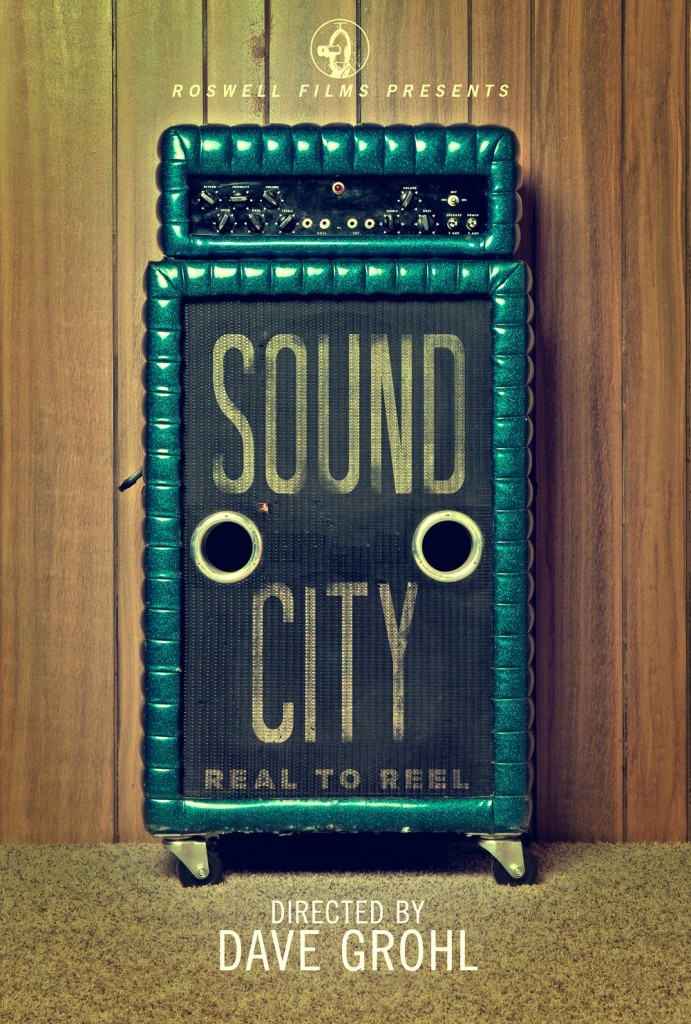
Sound City is a tale of two journeys; one that is centered on the custom analog sound board that created tens of dozens of seminal albums, and one that is centered on Dave Grohl’s (Nirvana, Foo Fighters) journey as a musician. These journeys would converge at one point, particularly for a reunion that would be one of Grohl’s finest moments. Told through talking head interviews with musicians, producers, engineers, owners, employees, and archive materials, Sound City explores the legacy of a visual eye sore that was a musical wonderland where a long list of albums and musicians made history.
The custom Neve 8028 console in Studio A was state of the art at the time of its installation at Sound City, and could capture a sound that was unmistakable to some. It helped that Studio A was also known for its uncannily superior drum sound; one that proponents say is cannot be replicated. The expense of the sound board was worth it; several dozen albums were recorded and produced there, from Neil Young, Fleetwood Mac, Dio, Grateful Dead, Tom Petty, Tool, and even Charlie Manson, to name a few.
Artists would flock to the studio throughout the 1970s and 1980s because of its iconic sound and legendary magic. However, there was a unanimous understanding that the place looked and felt like a dump, and the same people would repeat those comments after returning to that studio decades later. The physical vibe was not what had mattered; careers were made there, marriages began there, and beautiful music was played and captured, and no one ever blamed the equipment.
The rise of digital in the 1980s produced drum machines, synthesizers, and even digital editing suites, all of which were adopted by new acts and musicians trying to stay relevant. Hair metal and its fashions tended to match the synthetic sounds, and Sound City was not synthetic, nor was it a fashion. This digital trend put the studio into some disarray and financial trouble; that is until Nirvana booked the studio to record their sophomore effort, Nevermind.
Nirvana itself was a reaction to the digital wave, hair metal, and the decadent fashion, and had a much more primitive sound with introspective lyrics. The fusion between the legendary magic of Sound City, its drum sound, and its sound board of perfection mixed with Nirvana’s original brand of Generation X angst made for an album that was an instant hit, and put the studio back on the map. Nirvana would spur a whole new fashion of Grunge and alternative rock, and Sound City seemed like the best place for sincere music to be captured.
While Nirvana’s success sparked a renewed interest for bands to record their seminal albums at Sound City, the studio still could not keep up with the digital wave of Pro Tools and perfecting sounds that were meant to be imperfect to begin with. The studio would eventually close, with Dave Grohl purchasing the Neve board and installing it in his private studio with star musicians following the sound.
Studio City is an ode not just to a studio, its inherent sound, and its command center, but an elegy to analog sound and the magic of recording things as they are performed and not necessarily manipulating things to perfection. This return to analog audio and nostalgia is a cultural trend, augmented by the growth of vinyl purchases. Analog is expensive, hence Sound City’s eventual demise. Only the wealthy seem to be able to afford the luxury of tape and additional time necessary to produce an analog production. Fledgling bands today rely on low-overheads thanks to digital recording that can be recorded, mixed, and uploaded on an inexpensive smart phone.
Yet, Sound City is not a rally against digital, but it is a rally around the magic that happens when dreamers enter a room and collaborate. Even Grohl admits that musicians like Trent Reznor used electronic instruments as tool to augment his music and not form a basis. It also depicts a space that, although never built to do so, produced a sound that was iconic and beloved. Essentially, Sound City was a product of many elements, both controlled and inadvertent. Regardless, the magic was there and Sound City captured it.

