






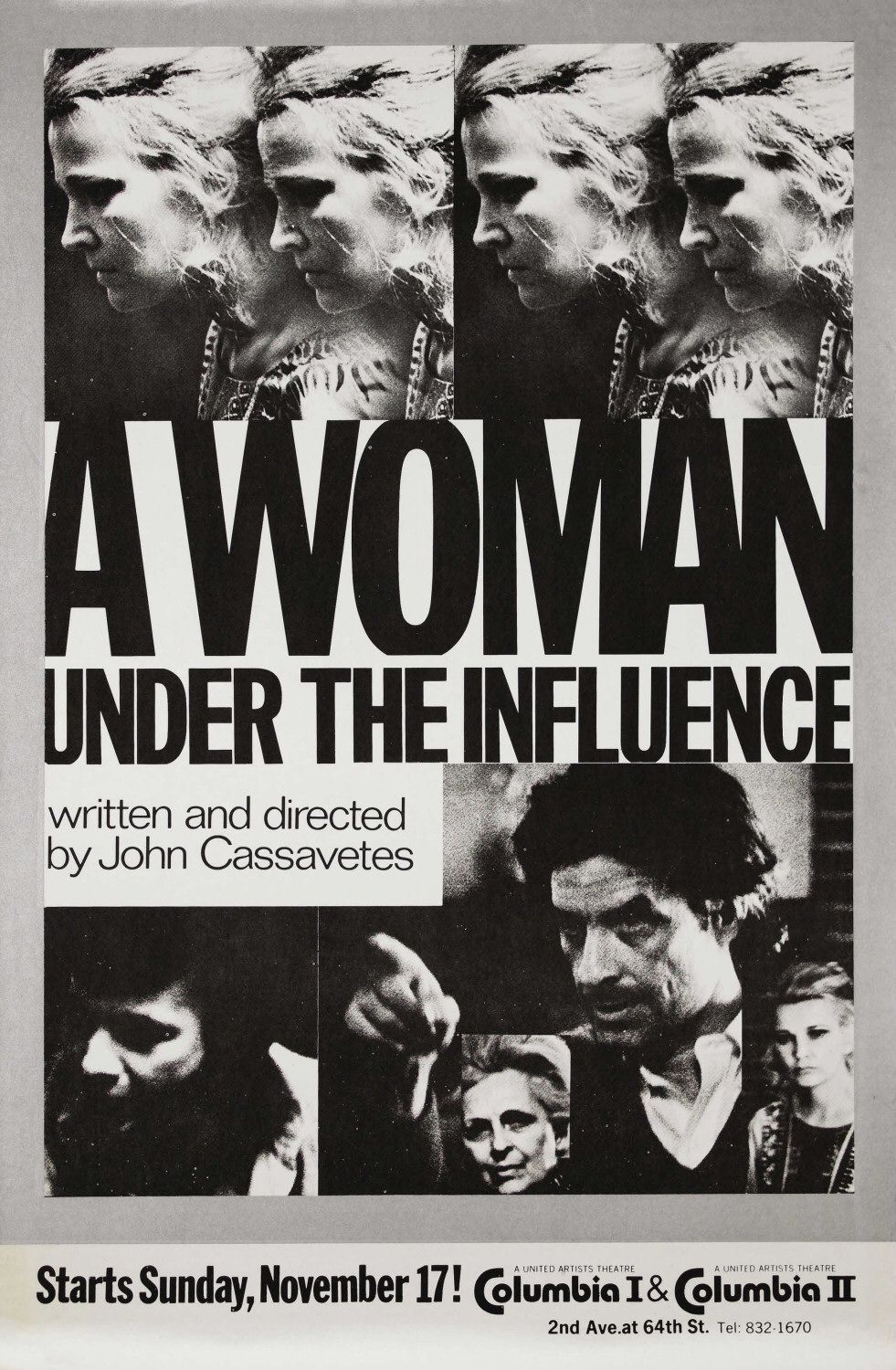
Out of any John Cassavetes film, A Woman Under the Influence may be his best and most accessible film. Featuring many of the previous styles and techniques Cassavetes has employed in his previous films, this film peeks into the lower-middle-class life of a family torn apart by the mother’s mental breakdown, fueled by what she conceives as failures and shortcomings of being the mother.
A Woman Under the Influence is a film told in three parts. Beginning with Mabel (Gena Rowlands) as a female homemaker who begins to act strangely around her husband and children. She gives her three rambunctious children to her mother for the night and waits patiently for Nick (Peter Falk) to arrive home, who never does. At the mild assumption that she had been stood up by her husband, for whom she aims to please for the night, she wanders to a bar where she picks up a man who she brings back to her home. The next morning Mabel confuses that man she slept with to be her husband, and he quickly leaves at this revelation.
Nick returns home in the morning with his construction friends, and Mabel begins an impromptu spaghetti breakfast for all, an attempt to please everyone. She persuades one of the workers to dance with her, and Nick breaks up the action. Her strange actions continue to build up until Nick decides it is best for her to get help at an institution. While Mabel is gone, Nick assumes the task of raising the children by himself for the time being, finding it difficult to do any better than his wife. Mabel returns to the home with some small kinks that still need to be fleshed out. Regardless, she is loved.
Much like his other films, A Woman Under the Influence takes advantage combining cinéma vérité camerawork with improvisational performances to capture gigantic mood swings that portray the compassion of the characters. Rowlands’ performance of a mother whose mental state is slowly deteriorating to the point where should could be a danger to herself and others. This role should place her firmly in the top ten lists of craziest mothers in cinema.
Cassavetes continues his repertoire for films that deal with the common American person dealing with the influence of society, and the inner struggle to meet society’s conceived placement of sexes. With Shadows, we find that a white male struggles to love a black woman despite the ideals of society in the late 1950s. Faces exposes the failing of a mid-aged couples marriage and where it leads them in the short term. Husbands portrays the revival of youth in middle-aged men who feel the guilt of their friend’s death. In A Woman Under the Influence, we find Mabel’s destructive nature as a result of her conceived failings a mother and wife, even when she tries oh-so-hard to please everyone.
Each of Cassavetes’ films appear to rely on the subject of the previous film, as if his filmography is a contemporary series of modern tales that culminates to a higher idea. A Woman Under the Influence continues Cassavetes’ repertoire of films that show the social and psychological implications of attaining the ideal of the American dream, several decades before anyone else claimed shenanigans.


